

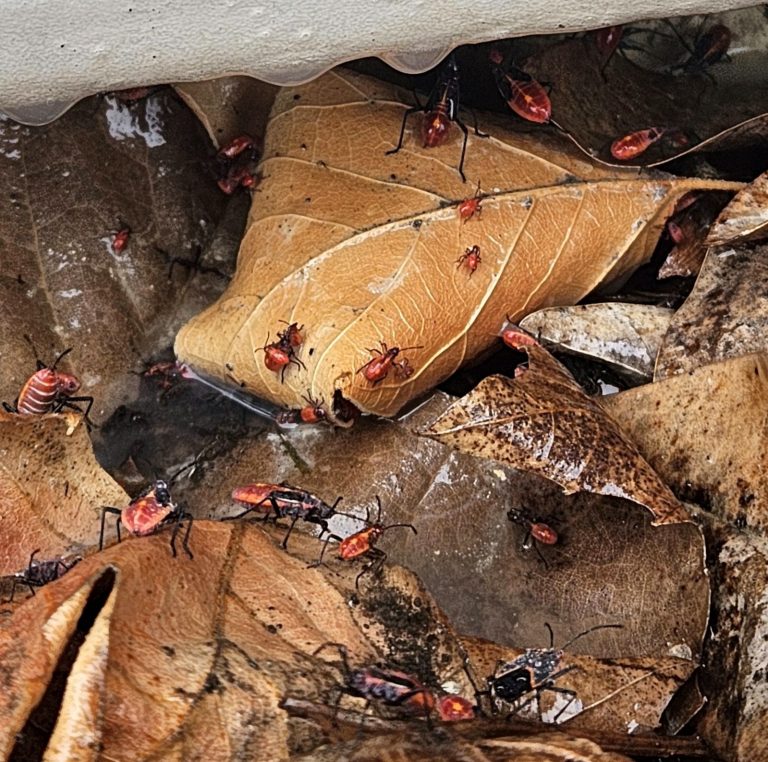
Common landscaping mistakes—like piling mulch against your foundation, letting shrubs overgrow, and allowing water to pool—create ideal conditions for insects and rodents to breed and move indoors. Correcting these habits, combined with a professional perimeter treatment, significantly reduces pest pressure around your home.
Your yard looks great. Freshly mulched beds, thick hedges for privacy, a birdbath tucked into the corner. What you might not realize is that some of those same features are quietly sending an open invitation to ants, mosquitoes, termites, and rodents.
Most homeowners think pest problems start inside. In reality, they almost always start outside—in the landscaping choices made season after season. A few small changes to how you maintain your yard can dramatically reduce the number of pests that make it to your door (and through it).
This post breaks down the most common yard mistakes that attract pests, explains why each one causes problems, and outlines how a professional perimeter treatment works as a reliable last line of defense.
How Does Mulch Attract Pests to Your Home?
Mulch is one of the most widely used landscaping materials in residential yards—and one of the most misunderstood.
The problem is not the mulch itself. The problem is where it goes and how deep it gets. When mulch is piled directly against your home’s foundation, it creates a warm, moist, sheltered environment that pests find irresistible. Termites, carpenter ants, earwigs, and sowbugs all thrive in decomposing organic material. Rodents use thick mulch beds as nesting cover.
The fix: Keep mulch at least six inches away from your foundation. Aim for a depth of two to three inches—enough to suppress weeds without creating a pest habitat. For high-risk areas near the home, consider switching to inorganic options like gravel or rubber mulch, which retain far less moisture.
Why Do Overgrown Shrubs and Dense Vegetation Invite Insects?
Shrubs that press up against your siding, vines creeping toward windows, and dense ground cover along the foundation all do the same thing: they give pests a protected pathway directly into your home.
Overgrown vegetation traps moisture, blocks sunlight, and reduces airflow—three conditions that accelerate pest activity. Stink bugs, spiders, and cockroaches commonly use dense plant growth as a staging ground before entering through gaps in windows and doors. Rodents take it further, using overhanging branches as bridges onto rooftops.
The fix: Trim shrubs so there is at least 12 to 18 inches of clear space between plants and your home’s exterior. Cut back tree branches that hang over the roof. Remove ground cover like ivy from areas adjacent to the foundation, particularly on the shaded north side of the house.
What Makes Standing Water Such a Serious Pest Attractant?
A single clogged gutter. A low spot in the lawn that collects rain. An upturned pot left out after planting. Each one can hold enough standing water to support a mosquito breeding cycle within days.
Female mosquitoes need as little as half an inch of stagnant water to lay eggs. Beyond mosquitoes, standing water attracts earwigs, springtails, and fungus gnats. It also softens soil against foundations, which termites prefer for tunneling.
The fix: Walk your yard after a heavy rain and note where water pools. Regrade problem areas to redirect drainage away from the home. Clean gutters at least twice a year, and empty or refresh standing water in decorative features like birdbaths every three to four days.
Are Woodpiles and Yard Debris Common Pest Habitats?
Stacked firewood stored against the house is a well-documented termite attractant. But yard debris more broadly—leaf piles, brush, decomposing stumps—creates the same problem.
These materials retain moisture, generate warmth as they break down, and provide the cover that pests need to establish colonies close to your home. Mice and voles nest in leaf piles. Termite colonies forage through old stumps. Cockroaches shelter under decaying wood.
The fix: Store firewood at least 20 feet from your home, elevated off the ground on a rack. Clear leaf litter from garden beds and along fences in fall and spring. Remove dead stumps where possible, or treat them to accelerate decomposition.
How Do Outdoor Lighting Choices Affect Pest Activity?
Outdoor lighting is not the first thing most homeowners think of when it comes to pest prevention—but it matters.
Standard incandescent and white LED bulbs emit wavelengths that attract flying insects, particularly moths, flies, and beetles. Large insect populations near entry points increase the likelihood of indoor infestations, and they also attract predators like spiders and geckos that may move inside.
The fix: Replace bulbs near doors and windows with yellow or amber-toned LEDs, which are far less attractive to insects. Position lights away from entrypoints where possible—fixtures mounted away from the house that illuminate the area work better than lights mounted directly beside doors.
What Is a Professional Perimeter Treatment and How Does It Work?
Even with careful yard maintenance, some pests will still attempt entry. This is where a professional perimeter treatment adds measurable value.
A perimeter treatment involves applying a residual pest control product around the exterior of a home—typically along the foundation, around window frames, door thresholds, and any visible entry points. The goal is to create a chemical barrier that eliminates pests before they make it inside.
Most professional treatments use one of two approaches:
- Liquid residual insecticides, applied as a spray along the perimeter, which remain active for several weeks and kill insects on contact.
- Granular baits, spread around the foundation, which target ants, crickets, and other ground-level pests through ingestion.
Professional technicians also perform an inspection as part of the service—identifying entry points, signs of existing infestations, and landscape conditions that increase risk. This is something a store-bought perimeter spray cannot replicate.
For most homes, treatments are recommended every one to three months, depending on pest pressure, climate, and proximity to wooded areas. Year-round programs tend to produce significantly better results than single applications.
Make Your Yard Work Against Pests, Not For Them
Pest control is not purely reactive. The yard conditions you maintain right now are either reducing pest pressure or amplifying it—there is no neutral ground.
Addressing mulch placement, vegetation clearance, drainage, debris, and lighting requires modest effort but produces compounding results over time. When paired with regular professional perimeter treatments, these changes form a multi-layered defense that keeps pest populations well away from your living spaces.
Start with one fix this weekend. Walk your perimeter. Move the mulch. Clear the gutter. Small adjustments made consistently outperform any single spray treatment applied without the supporting habits.
If you are unsure where your property is most vulnerable, a licensed pest control professional can assess your yard and recommend a perimeter treatment plan tailored to your specific risk factors and local pest species.
Frequently Asked Questions
What yard feature attracts the most pests?
Standing water is consistently cited as one of the most significant pest attractants, particularly for mosquitoes. Even small volumes of stagnant water—such as a clogged gutter or a dish beneath a potted plant—can support mosquito breeding within 48 to 72 hours.
How far should mulch be from the foundation to prevent pests?
Pest control professionals generally recommend keeping mulch at least six inches away from your home’s foundation. This gap reduces moisture accumulation against the structure and removes the sheltered environment that termites and other insects rely on.
How often should a professional perimeter treatment be applied?
Most pest control programs recommend perimeter treatments every one to three months. The appropriate frequency depends on local pest pressure, seasonal conditions, and the specific products used. Year-round programs tend to deliver more consistent protection than seasonal applications.
Can I do a perimeter treatment myself, or is professional application necessary?
Consumer-grade perimeter sprays are available, but professional pest control treatments use stronger residual formulations and include an inspection component. A licensed technician can identify conditions—like entry points and conducive landscaping—that a DIY application would not address.
Does outdoor lighting really affect how many pests enter a home?
Yes. Insects are drawn to specific light wavelengths. Standard white and incandescent bulbs attract significantly more flying insects than amber or yellow LED bulbs. Reducing insect activity near entry points lowers the chance of pests finding their way inside.
What is the most effective combination of pest prevention strategies?
Eliminating conducive conditions—standing water, excessive mulch, overgrown vegetation, and yard debris—combined with a professional perimeter treatment applied on a regular schedule provides the strongest overall protection. Neither approach alone is as effective as both used together.