

There are few things more frustrating than thinking you have solved a household problem, only to see it scurry across your kitchen floor a week later. You bought the sprays, you set the traps, and for a few days, the house was peaceful. But now, the ants are back on the counter, or the scratching sound has returned to the attic.
Recurring pest problems are not just a nuisance; they are a significant source of stress for homeowners. They can damage property, contaminate food, and make your own home feel unclean and unsafe. The reality is that most DIY pest control methods only treat the symptoms—the visible bugs or rodents—rather than the underlying disease, which is the infestation source and the entry points.
If you are stuck in a cycle of spraying and praying, it is time to change tactics. To permanently evict unwanted guests, you need to think less like a reactive homeowner and more like a strategic investigator. By understanding why pests return and implementing a multi-layered defense strategy, you can reclaim your home.
Understanding the “Why”: The Root of Recurrence
Before you reach for another can of insecticide, you need to understand why the pests are coming back. Dealing with a recurring issue usually points to one of three failures in the control process: failure to identify the entry point, failure to remove the attractant, or failure to break the reproductive cycle.
Pests are biological survival machines. If your home provides food, water, and shelter, they will find a way in. If you kill the foraging ants but leave the colony intact, they will simply breed more workers. If you catch a mouse but leave the hole in the foundation open, a new family will move in.
The Resistance Factor
Another factor to consider is resistance. Overusing the same chemical sprays can lead to a population of pests that are immune to that specific toxin. This is common with German cockroaches and bed bugs. If you have been using the same over-the-counter spray for months with diminishing returns, you might have inadvertently bred a stronger population.
Step 1: Conduct a Ruthless Audit
To stop a recurring pest problem, you must find the source. This requires a thorough inspection of your property, both inside and out. You are looking for three things: entry points, nesting sites, and food sources.
Exterior Inspection
Start outside, as this is where 90% of pests originate.
- Foundation: Walk the perimeter of your house. Look for cracks in the foundation, gaps around pipes, or loose vents. A mouse can fit through a hole the size of a dime; a roach needs only a sliver of space.
- Vegetation: Trim back trees and bushes. Branches touching your roof act as a bridge for ants, squirrels, and rats to bypass your ground defenses and enter through the attic.
- Drainage: Check your gutters and downspouts. Standing water near the foundation softens the soil and attracts termites and carpenter ants.
Interior Hotspots
Once inside, check the dark, quiet areas.
- Under Sinks: Moisture is a massive attractant. Check under the kitchen and bathroom sinks for leaky pipes or condensation.
- The Pantry: Check for spilled flour, open sugar bags, or crumbs in the corners of shelves.
- Clutter: Piles of cardboard boxes, newspapers, or clothes on the floor are prime real estate for spiders and silverfish.
Step 2: The Art of Exclusion
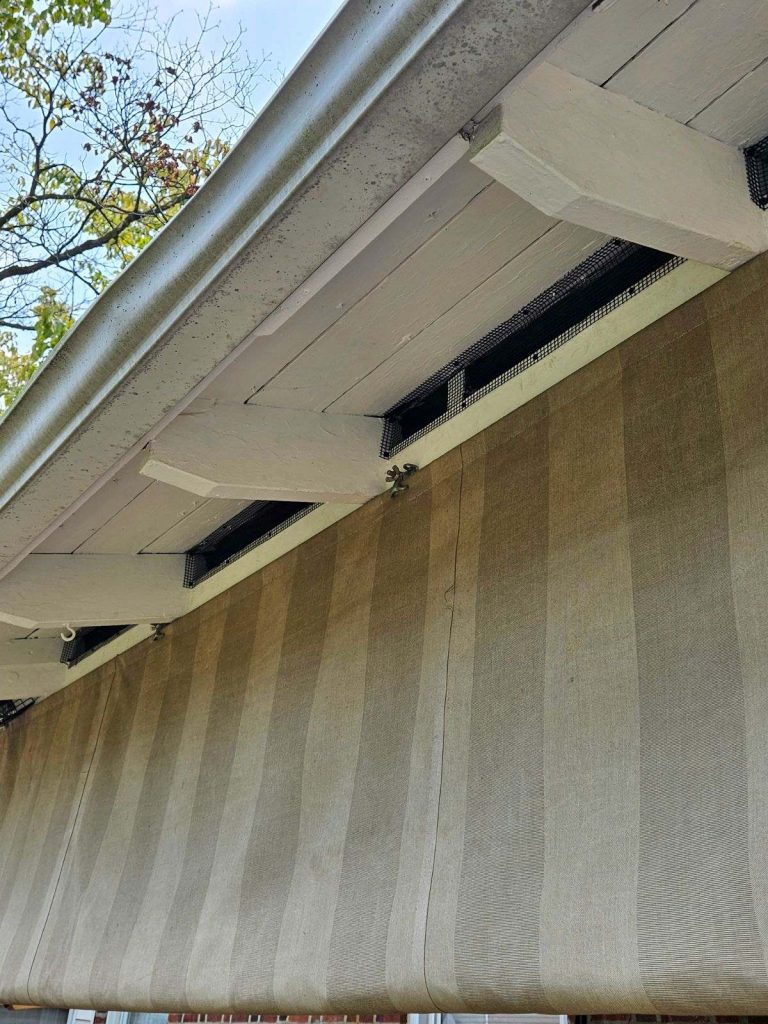
Exclusion is the most effective long-term pest control strategy. It involves physically blocking pests from entering your home. While chemical barriers break down over time, a physical barrier can last for years.
Start by sealing the gaps you found during your audit. For small cracks in walls or baseboards, a high-quality silicone caulk is sufficient. For larger holes, particularly around plumbing pipes or in the attic, avoid expanding foam. Rodents can chew right through foam. Instead, stuff the gap with steel wool or copper mesh, and then seal it with caulk or foam. The metal mesh is painful for rodents to chew, stopping them in their tracks.
Don’t forget the doors and windows. Install door sweeps on all exterior doors. If you can see light coming through the bottom of the door, a bug can get in. Repair ripped window screens immediately. These simple mechanical fixes often do more work than gallons of pesticide.
Step 3: Sanitation and Habitat Modification
You can seal your home like a fortress, but if you are storing a buffet inside, pests will try until they succeed. Sanitation in pest control isn’t just about “cleaning”; it’s about eliminating resources.
Water Management
Many pests, especially cockroaches and silverfish, can survive weeks without food but only days without water. Fix dripping faucets, ensure your dryer vents outside, and consider running a dehumidifier in damp basements or crawl spaces. By drying out the environment, you make your home inhospitable.
Food Storage
Cardboard and thin plastic bags offer zero protection against determined pests. Transfer dry goods—cereal, flour, sugar, pet food—into airtight, hard plastic or glass containers. This does two things: it keeps pests out of your food, and if you bring home infested food from the grocery store (which happens more often than you think), it contains the infestation to that single jar.
Take the trash out regularly and ensure your outdoor bins have tight-fitting lids. If you have pets, do not leave their food out overnight. This is the number one attractant for rodents and raccoons.
Step 4: Breaking the Lifecycle
If you have cleaned, sealed, and inspected, but the pests are still appearing, you likely have a reproductive cycle occurring inside the walls or hidden spaces.
Killing the adult pests you see is necessary, but it is insufficient. For every roach you see, there may be dozens of eggs waiting to hatch. This is where Insect Growth Regulators (IGRs) come into play.
IGRs are a type of insecticide that mimics insect hormones. They don’t kill the bug immediately. Instead, they prevent larvae from maturing into adults, or they sterilize the adults so they cannot reproduce. Using an IGR alongside a traditional bait or spray is a knockout punch. It ensures that the current generation is the last generation.
Baiting vs. Spraying
For recurring problems, baits are often superior to sprays. Sprays are contact killers—they only work if the bug walks over the treated area. Baits, however, are carried back to the nest.
Ants and roaches will eat the bait and share it with the colony, including the queen. This creates a cascade effect that can wipe out nests located deep inside walls where sprays cannot reach. Be patient with baits; you might see more bug activity at first as they flock to the food source. Let them eat, and the problem will soon subside.
Step 5: The “Neighborhood Effect”
Sometimes, you can do everything right and still have pests. If you live in an apartment complex or a row home, your neighbor’s infestation can easily become yours. Pests travel through shared walls, utility lines, and ventilation systems.
If you suspect this is the case, your exclusion efforts become twice as important. Seal every shared wall penetration. Dust insecticidal powder (like boric acid or diatomaceous earth) into wall voids via electrical outlets (after turning off the power and removing the faceplate). If you rent, document the issue and communicate with your landlord, as the entire building may need treatment for the problem to be resolved.
When to Call the Professionals
There is a point where a recurring problem surpasses the capabilities of DIY methods. If you are dealing with wood-destroying insects like termites or carpenter ants, professional help is mandatory to prevent structural failure. Similarly, bed bugs are notoriously difficult to eliminate without professional-grade heat treatments or chemicals.
If you have tried the steps above—audit, exclusion, sanitation, and lifecycle disruption—and the pests persist after 30 days, it is time to call in an expert. A professional exterminator has access to more potent products and the training to spot subtle signs of infestation that the untrained eye might miss.
Reclaim Your Sanctuary
Ending a recurring pest problem is rarely a single event; it is a process. It requires shifting your mindset from “killing bugs” to “managing an environment.” By removing the food, water, and shelter that pests crave, and by physically blocking their access, you force them to move on.
Stay vigilant. Continue to monitor your home even after the pests are gone. A little preventative maintenance on a Saturday afternoon can save you from the headache of a full-blown infestation down the road. Your home is your sanctuary—don’t let the pests take it from you.